Wednesday, July 4, 2018

Freedom, Rights, and Independence Day

The African American 4th of July
Today Americans of all colors, race and religion are free to join in the festivities of the 4th of July.  Not to dampen the spirit, but we can't forget that in 1776 slavery was a welcomed institution even while the words freedom and rights were widespread. Colonies fought against the British forces in the Revolutionary War, 1775-1783 for such freedoms and rights that were not extended to slaves for another 80 plus years. 

African American Revolutionary Soldiers
In some states, like North Carolina,  free-coloreds, like my ancestor Ned Griffin, were allowed to serve as soldiers, others as laborers.  Slaves, too, served as substitutes for white men.  In exchange they were most often promised their freedom, as my ancestor, Ned Griffin.  But they had to fight in the field, and then upon their return to their home state, had to fight in court, for the freedom promised to them. 

Ned Griffin
An Act for Enfranchising Ned Griffin, Late the Property of William Kitchen.

[An Act for Enfranchising Ned Griffin, Late the Property of William Kitchen Colonial Records. Acts of the North Carolina General Assembly, 1784 April 19, 1784 - June 03, 1784
; Volume 24, Pages 543 - 649.]
I. Whereas, Ned Griffin, late the property of William Kitchen, of Edgecomb county, was promised the full enjoyments of his liberty, on condition that he, the said Ned Griffin, should faithfully serve as a soldier in the continental line of this State for and during the term of twelve months; and whereas the said Ned Griffin did faithfully on his part perform the condition, and whereas it is just and reasonable that the said Ned Griffin should receive the reward promised for the services which he performed;
II. Be it therefore Enacted by the General Assembly of the State of North Carolina, and it is hereby Enacted by the authority of the same, That the said Ned Griffin, late the property of William Kitchen, shall forever hereafter be in every respect declared to be a freeman; and he shall be, and he is hereby enfranchised and forever delivered and discharged from the yoke of slavery; any law, usage or custom to the contrary thereof in anywise notwithstanding.
 
As many as 10% of the Continental Army soldiers were African Americans. Ancestor Ned Griffin, served in The Battle of Guilford Courthouse, March 15, 1781. The following history is available on the History from the National Park Service, Guilford Courthouse website.

Ned Griffin, a “Man of mixed Blood,” served as William Kitchen’s substitute in the North Carolina Militia.  William Kitchen deserted the army prior to the battle of Guilford Courthouse and purchased Griffin to serve in his place.
Hiring a substitute was a common practice for those who could afford it. In this case, Kitchen promised 
Griffin his freedom upon return. Griffin fulfilled his service (it is believed to have been at the battle of 
Guilford Courthouse), but Kitchen instead sold him back again into slavery [upon his return].
In April 1784 
Griffin petitioned the North Carolina General Assembly for his freedom based on Kitchen’s “promise.”  The assembly acted quickly and enacted legislation that freed and enfranchised Ned Griffin and declared him “forever delivered and discharged from the yoke of slavery.”

The Slave and the Fourth of July
If the 4th of July is a celebration of the birth of America's independence, and the works of the Continental Congress' adoption of the 1776 Declaration of Independence, filled with fireworks and cookouts, one must be reminded that it was not the birth of its citizens freedoms or independence.  

In July 1852 Frederick Douglass, a former slave and a leader in the Abolitionist Movement was invited by the Ladies' Anti-Slavery Society of Rochester, New York to speak at the Independence Day celebration. Millions of Americans of African descent were yet trapped in the tyranny of slavery decades after the Revolutionary War. Douglass delivered his Meaning of July Fourth for the Negrospeech as planned. First paying tribute to the United States, to Jefferson, to the Founders, to the Declaration of Independence, he then shared his "What, to the American slave, is your Fourth of July?" famous oration. This excerpt well explains not only what Ned Griffin endured for years after serving in the Revolutionary War, but the pains of his fellow plantation mates, not yet free. Douglass speaks on the limited celebration of Independence Day:
I say it with a sad sense of the disparity between us. I am not included within the pale of this glorious anniversary! Your high independence only reveals the immeasurable distance between us. The blessings in which you, this day, rejoice are not enjoyed in common. The rich inheritance of justice, liberty, prosperity, and independence bequeathed by your fathers is shared by you, not by me. The sunlight that brought light and healing to you has brought stripes and death to me. This Fourth of July is yours, not mine. You may rejoice, I must mourn. To drag a man in fetters into the grand illuminated temple of liberty, and call upon him to join you in joyous anthems, were inhuman mockery and sacrilegious irony.
Kathleen Brandt
a3genealogy@gmail.com

Tuesday, June 26, 2018

Break Down a Brick Wall

A Pro Genealogist's Approach
Interview and Video by Amy Johnson Crow
AmyJohnsonCrow.com

Yes, over 90% of our clients choose to add DNA kits as a vital tool to bring down their brickwalls.
Join me in Lincoln, NE, at the Lincoln-Lancaster County Genealogical Society 2018 Fall Conference, 18 Aug 2018.

Kathleen Brandt
a3Genealogy.com
a3Genealogy@gmail.com

Friday, June 15, 2018

4 Places for Missouri Genealogy

Tips from Kathleen Brandt
By Amy Johnson Crow
Original Posted: AmyJohnsonCrow.com

I will be giving the webinar “Within a 60-Mile Radius: Kansas City - The Midwest Gateway to Genealogical Resources” 25 Jun 2018 at 7:00pm CST for the Association of ProfessionalGenealogists.  This is one of four of the Pre-PMC Webinar.

Kathleen Brandt
a3Genealogy@gmail.com
a3Genealogy.com

Thursday, June 14, 2018

A Few Missouri Resources for Jewish Family Research

Where to Begin
In 1900 there were 934 Hungary born persons captured in the Missouri census. This number increased to 11,141 by 1910. What would cause such a dramatic increase in the Hungarian population in 10 years? The 1910 census also records that almost 8500 of these Hungary born residents lived in St. Louis and over 400 of them were living in Kansas City, Missouri (Jackson County). Numeric studies like this using Archives.com, Ancestry.com or Familysearch.org may help you trace your ancestor’s migratory path.

Since we were tracing a Hungarian Jewish family from Ohio to Kansas City, we repeated this analysis for Ohio which led me to the Western Reserve Historical Society at the Cleveland Jewish Archives from the Feinstein Jewish Center at Temple University  which held vertical files relevant to our client.

Concentrate Your Research
The idea is to narrow your search to the most likely city/town and repository that may hold documents on your ancestor. Of course this is of most importance when you are tracing a particular ethnicity or an ancestor from a specific religious sector (i.e. Jewish, Catholic, etc).

Another key is to know the endonyms so you don’t overlook local or community based records (i.e. Magyar / Hungary)

A Few Missouri Resources
Kansas City does not hold a genealogical goldmine of Hungarian immigrant research archives or collections, but it is rich in local Jewish historical documents. So before perusing the JewishGen.org website, focus your research locally.

Here are a few of the helpful repositories: 

If visiting Kansas City, you may also wish to add the Self Guided Automobile Tour of Contemporary and Historic Jewish Sites in Greater Kansas City.  

Kathleen Brandt
Accurate, accessible answers

Sunday, May 27, 2018

Jamaica - How to Research Ancestors

“De more yu luk, de less yu si”
Translation: The more you look, the less you will see.
Explanation: It is impossible to know every single detail about any matter.
Also, the more you find out, the less you know.


 I have visited Westmoreland Parish, Jamaica (#5), and a small bit of St. Elizabeth Parish (#2). Like most I flew into Montego Bay which is in St. James Parish (#3).

Jamaica is best known to tourists as having great sandy beaches, and beautiful turquoise water with spa resorts, and “ya mon” being share with the heartfelt “one love” attitude. But the culture, practices and historical residue is what kept me in the constant process of interviewing and digging a bit deeper.  As the proverb says, “De more yu luk, de less yu si.”

So What is Commonly Known
Typical tourists go to the spa resorts by assigned transport.  They see the small shanties for residence, large mansion styles in the hills, and food stands. There are the myriad of students and workers waiting on the road for “Route Taxi’s” to transport to school or work.  And of course, no one can miss the churches. They literally overshadow every community, roadside driveways, and poorly kept main roads.

Most have a bit of the Spanish, French and British slave history of the island. We’ve even learned through songs the rebellions that lead to emancipation.  But as genealogists we need to dig a bit deeper to learn about our ancestors. We must understand the history to understand the records.

Quick Genealogical Tips 
  1. Slave emancipation by the British was in 1838, leading to some records that may reveal your ancestor as a having a subsistence farm vs. working on plantations. Or being a free maroon - the maroons were Africans who escaped slavery (mostly run-aways) and set up communities of freemen in the mountains mostly in the eastern parishes.
  2. Your maroon family line may also reveal a connection to the indigenous Taino people as they joined to formed protected communities.  
  3. Your Jamaican ethnic origin may include that of ancestors of Chinese and Indian descent as by 1840 British used both as indentured servants on plantations.  
  4. Your Jamaican bloodline may include J1 or J2 Jewish Haplogroups on DNA results due to the European-expelled Jews who fled to Jamaica as early as 1510 but records may say “Portugals” as to not stir the wrath or mistreatment by the antisemetic. Good news is this information not only proffers your Jewish ancestry, but also perhaps their earlier homeland. But, remember this is just a hint. A totally different conversation is understanding the confusion of Sephardic vs Ashkenazic Jewish haplogroups.
  5. The facts and history of Jamaica settlement and slavery have been researched and recorded since the beginning of settlement, but the location of originals are not centralized.  A good place to start is in A History of Jamaica; From it’s discovery by Christopher Columbus to the Present Time, Wm. James Gardner, 1873.
Key Research Resources
A Solved Case
Slave Law of Jamaica, and other Hathitrust.org collections are quite useful in tracing your Jamaican ancestors. The a3Genealogy research team recently traced a Philadelphia free-colored descendant to his Jamaican slave ancestor emancipated in 1795 using the An Account of the Emancipation of the Slaves of Unity Valley Pen, in Jamaica, Barclay, 2nd edition, 1801 and of course other resources to include in-country sources.

Kathleen Brandt
Series, Jamaica 2018
a3Genealogy@gmail.com
Accurate, accessible answers

Tuesday, March 20, 2018

2020 Speaker Titles


One Motivated Mama Inspirational "Where you are going" Canvas by Ana Brandt.    www.shoptaopan.com  #inspiration #motivation #knowwhereyouaregoing #whereyoucamefrom #canvas #wallart #motivatedmama:
Visit Ana Brandt's Site
These are just a few titles offered by Kathleen Brandt as a conference Keynote Speaker or seminar Presenter. All are tailored to your conference theme or celebration. If you don't see what you want here, know I offer custom designed presentations and workshops. Know that all of the presentations are chocked full of actual images and many have real life short case studies. 

I am now scheduling for 2017.  But remember, I am often called upon as a last minute substitute, because we can never plan for those unplanned "life" events. 

Be sure to review the Experience/Qualifications page. 

Kathleen Brandt
Keynote Speaker/Presenter
816-729-5995

Presentation Titles for Your Conference

Military
Revolutionary War
·         Finding Your Revolutionary War Soldier
·         7 Best Revolutionary War Resources
·         Your Blacksheep: Courts-martial and Courts of inquiry records
War of 1812
·         War of 1812 Records: 10 Places to Research
·         Researching Your War of 1812 Impressed Seamen
Revolutionary War and War of 1812
·         African Americans Served Too – Finding Records
Civil War
·         10 Best Bets for Civil War Research 
·         7 Tips to Researching Slaves and Slaveholders
·         Finding Your Elusive Civil War Veteran
·         Claim It!  Southern Claims Commission Records and Slave Claims Commission Records
·         Researching Grand Army of the Republic (GAR) and other Association Records
·         Civil War POW Records
Modern Wars (WWI - WWII
·         Military Records Were Destroyed? What to Do?
·         7 Easy Tips to WWI and WWII Research
·         Forgotten Records -  WWI and WWII

Research Methodology
·         Leaping Over Brickwalls
·         The Changing Surname - How to Trace It?

DNA
·         DNA: Spit or Swab?  (Beginner)
·         DNA for Genealogists: Who? What?, When? Where? (Intermediate)
·         From History to Present: DNA Research (Case Studies)
·         DNA All Day Workshop (all levels)

Research Tools
·         Tech Toys for Genealogists: It’s All Portable
·         Oral and Family History: Sharing Our Ancestors
·         The Cloud: Looking Forward to Backing Up
·         Technology Toolbox for Genealogists

African American Research
·         7 Tips to Researching Slaves and Slaveholders (with MO. Case Study)
·         Researching the Road to Freedom (Prior to the Civil War)
·         7 Resources to Researching Missouri Ex-Slaves and Free-Coloreds.
·         Using Ship Manifests for Slave Research
·         African Americans Served Too: Finding Revolutionary War and War of 1812 Records

International: Emigration - Immigration
·         When They Came to America Where Did They Go?
·         Blackbirding: Sugar, Cotton, and Slaves! Researching South Pacific Island Laborers
·         Did Your Ancestor Become a US Citizen? Where to find Records and Documents

Local Topics and Custom Designed Presentations
Have a unique topic?  Due to our vast client base and experience, presentation just for your local group can be customized. Of course actual images of documents and relevant research tips are shared and often accompanied by a case study.
·         “Delegation of Colored Men” 7 Resources to Researching Western-North Carolina Ex-Slaves and Free-Coloreds.
·         Pioneer Trail From Missouri to California: How to Trace Them?
·         Tracing My State Militia Records
·         Tracing Huguenots – From There to Here

Motivational
·         Your Pioneer Ancestor and You!  How Our Ancestors Did It?
·         The Invisible Staircase: How Missouri Did It!

Entrepreneur You
·         Make Money: Your Genealogy Empire


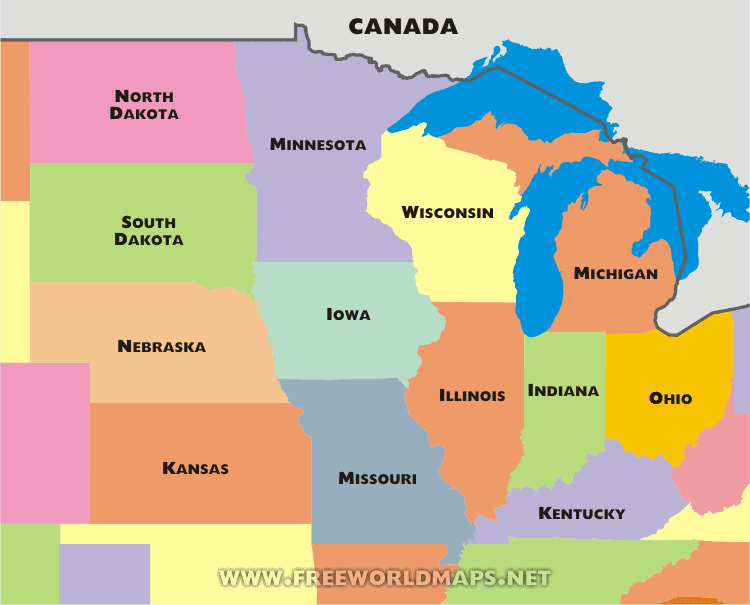
Midwest and Missouri Specific
Image result for midwest map
Midwest German Settlers
·         Researching Germans from Russia Ancestors
·         8 Tips to Researching Your Missouri Rhineland Ancestors

Missouri Irish
·         Tips to Tracing Your MO. Irish Ancestor - From Immigration to Emigration

Bohemian Settlements
·         5 Research Tips to MO. Bohemian Ancestors

Friday, March 16, 2018

Press Release - New Partnership

DNA Analysis Is Important 
a3Genealogy, of Kansas City, Mo, is pleased to announce that, effective immediately, we have entered into a definitive partnership with In-Genes, a provider of genealogical DNA analysis and founder of the “DNA Heritage Finder” database. A significant benefit of this partnership will be in the area of non-paternal event and adoptee research.

The partnership with In-Genes, based in Los Angeles, further aligns and strengthens a3Genealogy’s position in the genealogical research industry and will create a more comprehensive infrastructure. In-Genes’ proprietary database “DNA Heritage Finder” and a3Genealogy’s longevity in the industry providing extensive genealogical expertise will expedite the process of DNA analysis and reporting and will result in greater efficiencies and significantly increase capacity.

We have worked together for media and individual clients for over a year and our business values and philosophies align: the client being the focus, delivering the best possible product with an emphasis on honesty, integrity, and scientific rigor, as well as connecting the past and present.

Please join us as we look forward to an exciting and prosperous future for a3Genealogy, our project partners, and our clients.


Kathleen Brandt
a3Genealogy.com
Accurate, accessible answers