Monday, March 28, 2022

6 Tips to Researching Female Ancestors


Six Tips to Uncover Female Ancestors
The a3Genealogy Research teams delight in tracing female ancestors who paved the roads for us. Were they housewives and mothers, were they teachers or schoolmarms, were they wet nurses or midwives, were they the maids, the slaves, the cooks? Did they attend suffrage movements, or civil rights movements? Were the abolitionists, prohibitionists, or fighting for unwed mothers? Our female ancestors influenced change. When I felt disempowered at work or at home, my mother would proclaim “the woman was the neck, that turned the head.” 

The Missouri Republican, St. Louis, MO,25 Aug 1873, Page 1


When looking for women ancestors, though, it can be challenging. The majority changed their names, and their identity through marriage. But remember all did not! Was your female ancestor one of the married stage performers who proudly held their maiden name? 

Let us share tips to researching your female ancestors

  1.  Women Organizations. 

 The National Association of Colored Women’s Club, Inc.
founded Washington, D.C. in July 1896

 These groups may have been for ethnic socializing, divided by class, or designed to promote “worldliness” like an education curriculum for women on par with men. They were for women to vent, mingle, chart out their children’s social circle, and to influence politics often through their husbands.

2.  Local community and political activities.
Be sure to plot out your female ancestor’s timeframe using community and political issues. It’s overwhelming how many women groups met in “secret” to fight for their agenda. These groups may have been an ethnic groups, divided by class, promoting “worldliness” like an education curriculum for women on par with men.
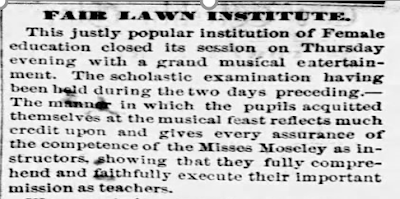
 3. Women School Records.

The Clarion-Ledger (Jackson, Mississippi) 7 Jul 1870, pg.1

Men didn’t seem to bulk at women reading the Bible and taking darning and sewing classes.  But often the line was drawn at philosophical, maths, and “brainy knowledge.” Although 1800 education was seen as a way of making women better wives and mothers, there were some progressives that moved the educational rod to encourage education for women to be transformative. I’m a proud alumna of Stephens College, 1333, Columbia MO, a women’s college. By the way, they have an amazing archive filled with history. During WWII, they housed and educated orphan teenagers from across the nation - children of war veterans. 

4. Church Minutes / Records. 

Have you read these gossip-filled accounts of the congregants?  Oh my…we have found records from Quakers, the women, who held important positions in conducting the Underground Railroad, to the public shaming of those in infidelity in the German churches of Missouri. Contrary to common belief, these records are not just filled with sacraments dates.   

5.  Immigrant Societies. 

Women were activists.  They helped with the immigrant societies. This was not just in port cities, but inland also. They were active in the Volga – Germans, Irish, German, Italian, etc. communities.  Again, scour the society books for familiar names. Review newspaper articles on the local immigrant societies. Discover which roles the women played. They were like matchmakers of old.  They connected wives and children to housing. They were thanked for holiday meals and performances. They fought for the poor and admonished “the wicked!”

6.  Delayed birth records of the community


At a brick wall? Try reviewing early birth records, especially delayed birth records of the community. We have uncovered over a half dozen female ancestors for clients as they were midwives.  Yes, you have to conduct the research, but if Louise was her name, be sure to uncover "Louise" named midwives on birth and delayed birth records. Delayed birth records come with affidavits that may assist in identifying your “Louise.”  

Other article:
Genealogists Can Reconstruct the Lives of Female Ancestors
The Daily Herald, Mar 26, 1998 , pg 39

Fewer Records Available for Women Ancestors
Victoria Advocate
, Apr 06, 2003 ·Page 39

Be Historically Correct

Kathleen Brandt
a3genealogy.com
Accurate Accessible Answers
a3genealogy@gmail.com 


Sunday, March 20, 2022

Researching Colonial Virginia, North Carolina, and South Carolina


Image from The Lost State of Franklin

Why Can’t I Find My Records?
As we research the John Nichols family born about 1708, Virginia, the Wiley J. Morris family born 1807, presumably in Rutherford, NC, the Thomas Morris and  the 1770 Williams Eaves families of Tryon in the State of Franklin the a3Genealogy Research Teams once again discovered that the records needed did not exist.  

This has been a three part project as we ferret out relevant records for the time frame.

Step 1:  Learn the formation of counties, dates of statehood, and the locations of settlements for your county and state of interest

Step 2:  Find the records that may exist.  Timelines are useful in helping us identify the “correct ancestors” and their whereabouts. I mean, really?  How many John Nichols were there in early 1700 Virginia. Might I say, we have not yet exhausted them, I’m sure.  So where do you begin?

Step 3:  Does DNA support your findings for these common-named ancestors?

Step 1

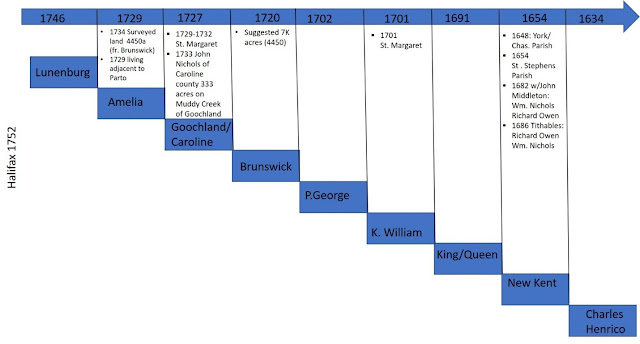
For each state we have created a similar map as below. However, know we use such a map for each of the contiguous states. This allows us to note “sightings” of our person of interest, counties of interest and documents found. Let it be known that some of the blank counties in the chart are noted because the chart must encompass the counties impacted by formations of new counties This is capturing the migratory path of our person of interest who settled in Halifax County, VA in 1752.   

Virginia Formation Map for Nichols

Step 2 
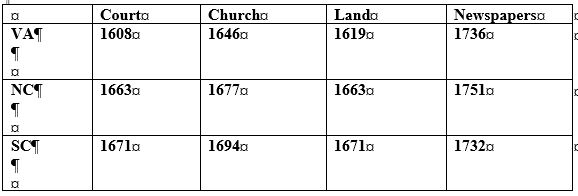
So, what records existed in VA during this 1634 - 1746 time period? For our internal projects, the following chart is much more comprehensive by county not state.  

The same process is followed with North and South Carolina for our Morris and Eaves colonial projects. This project includes the State of Franklin (1785-1788). Use link to learn more.  Know that due to common names within family units and communities, many negative hours of research hours have accumulated.  But, the alternative is placing the wrong Thomas Morris, or the wrong John Nichols in the family trees.

 Can DNA Help?
As touted within the genealogy community, DNA is a great tool to support the papertrail; or, the papertrail should support the DNA test results. 

The Eaves project was born out of a y-DNA contradiction. Our Eaves client proves to be of a Morris bloodline and a relatively close cousin of the descendants of Wiley J. Morris.  A family bible solidly identifies Wiley J Morris, born 1807, and it is supported by the DNA results. 

We are keeping a close eye on the Nichols y-DNA tests results and Nichols/Nicholls project on FamilyTreeDNA in hopes to find  a smoking gun. In the meantime, there are many more paper records to scour to positively identify the parents of John Nichols, 1708. 

Be Historically Correct

Kathleen Brandt
a3genealogy.com
Accurate Accessible Answers
a3genealogy@gmail.com

Saturday, March 5, 2022

Native American DNA

Ancient to Contemporary and Tribal Maps and Communities

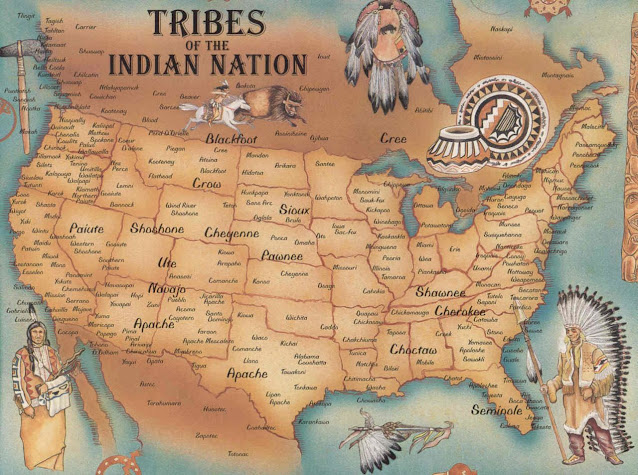
At RootsTech this week Roberta Estes spoke on Native American DNA Ancient and Contemporary Maps. It must be stressed that where records are not extant, the ancient DNA still exits. It tells us the story of our ancestors prior to the records.  But I digress.

At a3Genealogy we recently did a large Native American job. We were able to learn much through both the Y-DNA and the Mitrochodrial DNA haplogroups.  At least we learned of the migratory path as supported in academic and scientific papers.

 a3Genealogy Question Bag
        Am I Native American?
        What is the significance of the haplogroup?

Where to Begin
When the a3Genealogy Question Bag receives this line of questioning, we direct the family researcher to the FamilySearch wiki article, Finding Your US Indigenous Ancestor.  And then, we share with them articles, videos and presentations that may assist in their DNA discoveries.

Native American Y-DNA
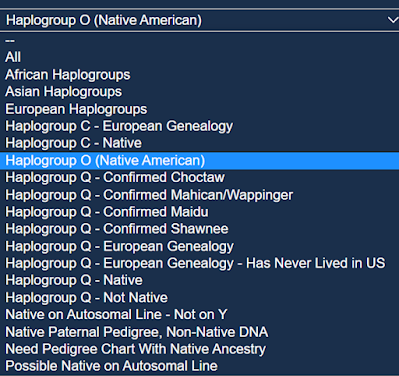
Let’s start with your Y-DNA haplogroup. You recognize it was an O - the newest of the Y-DNA Native American haplogroup.  What’s interesting is that Native Americans are a subset of haplogroup C and Q, also, which also represent European heritage. But some charts are just befuddling. How can I be “Q Not Native?”  And why would my Y-DNA results have the option of “Possible Native on Autosomal.”

Might I warn you that DNA is not static. New discoveries are shaping haplogroups and out applications to recreating our ancestors’ migration patterns and makeup. 


According to FamilyTreeDNA, here are known Native American Y-DNA Haplogroups.
(Click links below to learn more of each.)

Haplogroup Q-M3 
Haplogroup Q-M346 
Haplogroup Q-P89.1 
Haplogroup Q-MEH2 
Haplogroup Q-NWT01 
Haplogroup Q-SA01 
Haplogroup C-P39 
Haplogroup C-M217 

Without disrupting belief systems, did you know the Q subclade’s earliest haplogroup is identified have existed about 12.5K years in Montana?  Hmmm. Now, we are only talking the Native American subclades here, not Scandanian Q.  The main message we get from some of these maps and haplogroups is that we must be cautious when working with haplogroups for Native Americans, as these same haplogroups may represent European That opens up so many more questions. 

Native mtDNA
Known Native American haplogroups are the following with mitochondrial (mtDNA): Haplogroups A, B, C, D and X. But like his Y-DNA “counterpart” not all subgroups in each main haplogroup are Native -American Indian” (FamilytreeDNA). For example: the pie chart below Pie chart hows the proportions of Indigenous American haplogroups & other contributions to the Mexican mtDNA pool. 


See text for details. Image: The Mitochondrial DNA Landscape of Modern Mexico.

Many find it also particularly interesting that an "F" mtDNA has not yet been uncovered;  but yet there F1a1 and F1a1a  haplogroups have been identified.  This new haplogroup is tagged as Native in Asia and Polynesia.

How to Use This Information
This blog post was inspired by Roberta Estes’s RootTech presentation of 3 Mar 2022 where she shared migratory ancient Native American migration related maps. For example,  Mitochondrial (mtDNA) Haplogroup B2 was found in Alaska.  but it migrated to Brazil and Peru. What’s of keen interest is the comparing of these ancient maps to contemporary maps in the New World. 

Here are the major points.  To sum it up how analyze your DNA ancestry comparing ancient haplogroup discoveries and maps to our contemporary DNA results and settlements on maps.

  1. test, test, test, to include cousins on the line . If it’s Y-DNA you will want the Y-DNA Big 700 2) you identify your haplogroup of interest
  2. reference the ancient and contemporary maps as offered
  3. using Estes’ book look up the associated maps.
  4. review the RootsTech presentation given by Roberta Estes,  Native American DNA - Ancient and Contemporary Maps as a reference to the associated Native American tribes, tribal association, and communities (both ancient and contemporary) for your Haplogroups of interest.

More Reading?
Here is an article, 16 Jan 2022, about Este’s newly published book: DNA for Native American Genealogy Book Published

At a3Genealogy, our In-Genes DNA Team try to stay abreast with the work of Jennifer Raff who studies ancient DNA. Read Origin’ explores the controversial science of the first Americans, published in ScienceNews. 

As we say at a3Genealogy… “Dig Deep!”


 Be Historically Correct

Kathleen Brandt
a3genealogy.com
Accurate Accessible Answers
a3genealogy@gmail.com

Thursday, March 3, 2022

DNA Kit on Sale

MyHeritageDNA kit

MyHeritageDNA

Are you attending RootsTech? Best sales of the year. Don't get left behind. 
MyHeritageDNA for only $59.00.  Expires 6 March 2022.
I'm encouraging all a3Genealogy clients to get tested. 

Link here:  MyHeritageDNA kit

Will see you 10 March 2022 for our DNA symposium.  We will cover the features of this kit, week 4,  along with DNA Analysis Techniques and Tips offered by this kit.  

Be Historically Correct

Kathleen Brandt
a3genealogy.com
Accurate Accessible Answers
a3genealogy@gmail.com

Sunday, February 6, 2022

Missing German Immigrants?


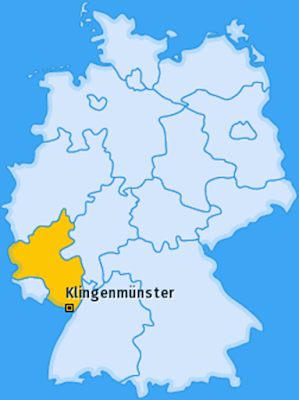
Map Image: PLZ-SUCHE.ORG, Postcode Klingenmünster; 
https://bit.ly/3GDyyRa

Tips to Tracing and Connecting the Siblings

Well, they really weren’t missing, but four of the nine immigrants who came to America changed their first names from how they were written on their German baptism records: completely changed! Three of the nine changed the spellings of their surname, and others Americanized their names. Come to think of it, of the nine immigrants (siblings), only Margaretha’s original name was found in the US printed and used periodically exactly as spelled on her baptismal record - and even she was nicknamed Gretchen.

Let’s add to the obstacles of this immigrant research and share that the children immigrated from abt. 1856 until abt. 1863. Mostly they entered by way of New York and settled in California, Oregon,  Louisiana, and Texas. Oh and all but one of the five sisters of this brood married multiple times in America.  

Well the scenario is not unique; mater of fact at a3Genealogy, we pretty much know what to expect.  So we thought we'd share a few tips.

Start with Birth/Baptismal Records
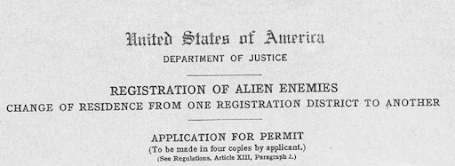
You may be able to analyze the indexed birth and baptismal records on ancestry.com, or locate a filmed in the Family History library collections.  Researchers need to analyze the original documents to confirm family units. And the German genealogists on this project was able to access all of the children of Sebastinus and Christina, Katholic, Bavaria using the documented naturalization record for birth and place of birth.

Well, actually, this immigrant was born in Klingenmünster, Germany. The associated German records revealed his parents names and names of Godparents. Don’t forget the Godparents, they are often extended family. Plus, it may be the Godparents that prove you have the correct family unit. Because we know there can never be too many Anna Maria’s or Johannes with a surname of Clos or Glos?

3 Cautionary Tales
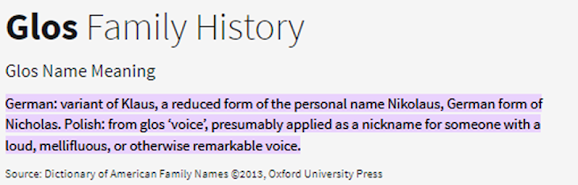
Let’s take the surname Clos or Glos for an example. Surnames were fluid. People think American immigrant surnames are the key to locating the origin. Well, this cannot be further from the truth. The occurrences of our ancestors from various countries, or different ethnic groups across countries, and of course, the ancestors who chose to adopt a new surname or Americanized spellings were just too common! This voids the theory that surnames are attached to place of origin. 

1. Altered Surnames. The baptismal surname used uncovered as Glos. Though this research began about twenty years ago in Germany using baptism records, they are now indexed on ancestry.com, and the digitized record may be within the Family History Library collection. 

Outside the USA, Glos was a popular surname in Jordan, Poland and Scotland, as well as Germany. But, to learn more about a surname don’t’ forget one place surname studies, such as Guild of One-Name Studies (or you may wish to start one); and the various surname histories like Forebears.

It was here that we discovered the key to confirm sister number five (#5). Her descendants were of little help as they used Klaus, Close, Glos, Gloss, and Glose as her surname. Through our surname research we learned that Glos, in Germany, might also be seen as Clos, Close, Glose, Klaus, etc.. With this tidbit of information, we were able to trace the small breadcrumbs that lead directly to her identification: family letters, government records, American births and deaths, DNA, etc. tying her directly to her siblings.

2.  Adopted and Americanized Names


We keep reminding our readers that the most direct line to your ancestors may be through other family members or the community. There are several associated family records that may reveal adopted names.    

      • Passports 
      • Government Affidavits 
      • Family Obituaries
3. Married Women Are A Hassle! to trace especially when they marry multiple times. 
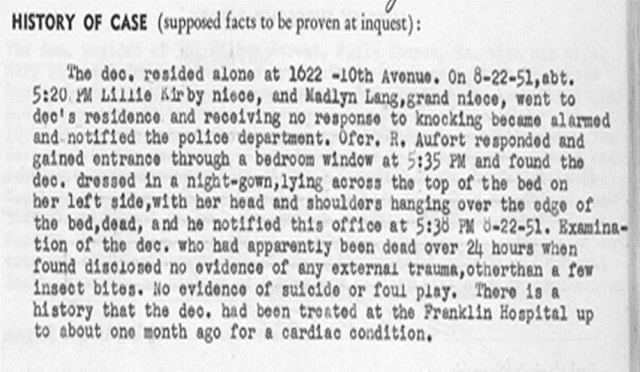
But analyzing households, court records and obituaries  and coroner records of the full family, you too may realize that your Magdelana turned “Helen” in America married twice and her niece mentioned in the coroner’s report was identified as the married daughter of one of the sisters.  

Coroner's Register, San Francisco, CA, 1951, familysearch.org

Success! No, it’s not easy, but it can be done.  We were able to flesh out the lives of  all nine of the known "sibling" immigrants. German records proved that the older two lived and died in Klingenmünster.

Happy February 2022

Be Historically Correct

Kathleen Brandt
a3genealogy.com
Accurate Accessible Answers
a3genealogy@gmail.com


Saturday, January 29, 2022

DNA: What is a Three-Quarter Sbiling

If the human version is difficult, try using thoroughbreds:
Silver Comic, Comic Strip , Now That's Funny, Red Ransom, and Silver Hawk
Published by: The Courier-Journal (Louisville, KY, 20 Nov 1999, pg 20; newspapers.com.

 a3Genealogy Question Bag 

Question: Are these first cousins as I know them to be? 

Answer: No, it appears you all are three-quarter siblings?  This answer is so much easier to understand in thoroughbred horses!

In the a3Genealogy client's case, one man impregnated three sisters, and married two of them. The third sister married his first cousin. NEVER a dull moment at a3Genealogy and the In-Genes Team. 

What are three quarter siblings? 
The following is a direct copy from the ISOGG WIKI

“Three-quarter siblings are siblings who are genetically half way between full siblings and half siblings. This can happen, for example, if they share the same father but different mothers but their mothers are sisters which makes them effectively both half-siblings and first cousins. An alternative scenario is if a woman has a child with both a man and his father which makes the children related both as half-siblings and half-aunt/uncle vs half-nephew/niece.

Three-quarter siblings can occur as a result of the following scenarios:

·        a man has children with each of two sisters (the children are related as half-siblings and first cousins)

·        a woman has children by each of two brothers (the children are related as half-siblings and first cousins)

·        a woman has children with both a man and his father (the children are related as half-siblings and half-aunt or half-uncle and half-niece or half-nephew)

·        a man has children with both a woman and her daughter (the children are related as half-siblings and half-aunt or half-uncle and half-niece or half-nephew)

Full siblings share on average 50% of their DNA when accounting for both fully identical and half-identical regions. Three-quarter siblings share on average 37.5% of their DNA with both full and half-identical regions.[1] However, the range of sharing for both full siblings and three-quarter siblings is variable. Full siblings can theoretically share between 38% and 61% of their DNA.[2] This means that there can be an overlap in the ranges at the low end of sharing for full siblings and at the high end of sharing for three-quarter siblings.”

Further Research

Continue following the DNA for Genealogists Flipboard Magazine for articles like these. Articles of interest are constantly added. 

Be Historically Correct

Kathleen Brandt

a3genealogy.com
Accurate Accessible Answers
a3genealogy@gmail.com

Friday, December 3, 2021

Can Slave Families be Traced before 1870?

U. S. Freedman's Bank Records, 1865 - 1874

a3Genealogy Question Bag 

Question?
 A genealogist recently explained that slave families can't be traced, because before 1870 they were not named in the census.  I've read your blogposts that suggests otherwise.  Is it really possible to trace slave families?  How do you [a3Genealogy] connect the families if the slaves were sold on a auction block or separated from family?  Regards, Lorenzo

Lorenzo, 
Thanks for submitting this question. Yes, genealogists and family historians can often "trace" and "connect" slave families.  

First note: genealogy is not a regurgitation of census records.  Good genealogy research will include historical documents and records, to uncover information. This is to say tracing a slave family does not start or end with the 1870 Federal Census.  However, unless manumitted before the enumeration of the 1870 Federal census, this was the first attempt to name ex-slaves. Early manumitted persons may be named in earlier enumerations. BUT...we are only talking census records here. Let's cover a few other resources. 

Answer
There are so many other records and documents to turn to in order to gather parents and siblings names.  Here are just three of our favorites.
  1. Military Records: Did your African American ancestor serve in the Civil War, or a veteran of later military service? Parents were often named, the depositions of family members were identified in pension records, plus other nuggets can be gathered: slaveholder names, residences, etc.  Full records are held at NARA - Archives I, Washington DC. However, researchers may begin this research on fold3.com
  2. Southern Claims and Border State Claims: Researchers may find names of slaves and their ages; slave connections recounted by slaveholders, ex-slaves or free coloreds. Start here to learn more about Southern Claims.
  3. Freedman Bureau Records from 1865 - 1874. The image above proffers an outline of a full ex-slave family to include parents and siblings and hints on where to research - residence. James was born abt. 1833, well into the era of slavery.  

Lest Us Not Forget DNA
And remember DNA is a wonderful tool to connect with distant cousins. It is through DNA analysis that identifying the Most Recent Common Ancestor is possible. In tandem, we often use deeds, wills, probates, court minutes, etc, to connect slave families that have been identified through DNA

Lorenzo, keep in mind this slave family research can be arduous and time consuming.  But, it is indeed possible.  

Be Historically Correct

Kathleen Brandt
a3genealogy.com
Accurate Accessible Answers
a3genealogy@gmail.com