Monday, February 29, 2016

Was Your Ancestor a Miniaturist - Artist?

one of the oldest known dollhouses dated 1639...in a museum in Germany! LOVE!:
Stomer House (Dollhouse), Germany, 1639
Researching via Miniatures - Portraits and Toys 
The art form of miniatures can be seen in the works of early portrait painters and skilled toymakers.  German, French, Italian and British immigrants, and Irish immigrants began introducing their skills of toy making and miniatures in the New World by the end of the 18th century. Your ancestor may be uncovered in apprentice or bond records, or in the records of a beloved artists who tutored and apprenticed others. Famous artists, like the Irish miniature portrait painter Walter Robertson, abt 1793, records may lead you to an ancestor.  Read more on the Met Museum website.

1-2-3 Where to Begin
Albert Jackson, line 4, painter miniature, England
1.   Census. The 1920 census provides researchers with wonderful hints. Take note of the occupations of your ancestor and the industry.   
2. City Direoctories. You may find your ancestor listed as a miniaturist in the city directory. 
3.  Biographies and Obituaries. 
We find many portrait painters also specialized in miniatures. Often this specialized art form is provided in their obituaries and bios.
4.   Newspaper articles. 
Female Miniaturists, Burlington Evening Gazette, 22 Jul 1899
Women were active artists in miniatures.  Be sure to reference North American Artists of the 20th Century by Jules Heller and Nancy G. Heller.

Thomas Middleton
Met Museum Website
For More Research
  1. Patents. In addition to census records and city directories, the occupation of these specialized artists may be noted in and in both Foreign and US patents allowing the family researcher to learn a bit more about their ancestor.
  2. Society Records. For miniaturists research be sure to visit the Miniature Art Societies. Your ancestor may be named as a member, sculptor, graver, or painter. The Société des Miniaturistes et Enlumineurs de France, was found in 1890; whereas The American Society of Miniature Painters was founded in 1899.
  3. Museums An artistic end . product - portraits, toys, miniatures - may have been salvaged and on exhibit in a repository. Have you seen a replica of your ancestor's home? Miniature dollhouses may even be an exact replica of an existing or old structures.
The National Museum of Toys/Miniatures in Kansas City holds a wonderful collection of modern craftsmanship of Miniatures. Be sure to visit their collection. 

Kathleen Brandt
a3Genealogy.com
Accurate, accessible answers

Sunday, February 21, 2016

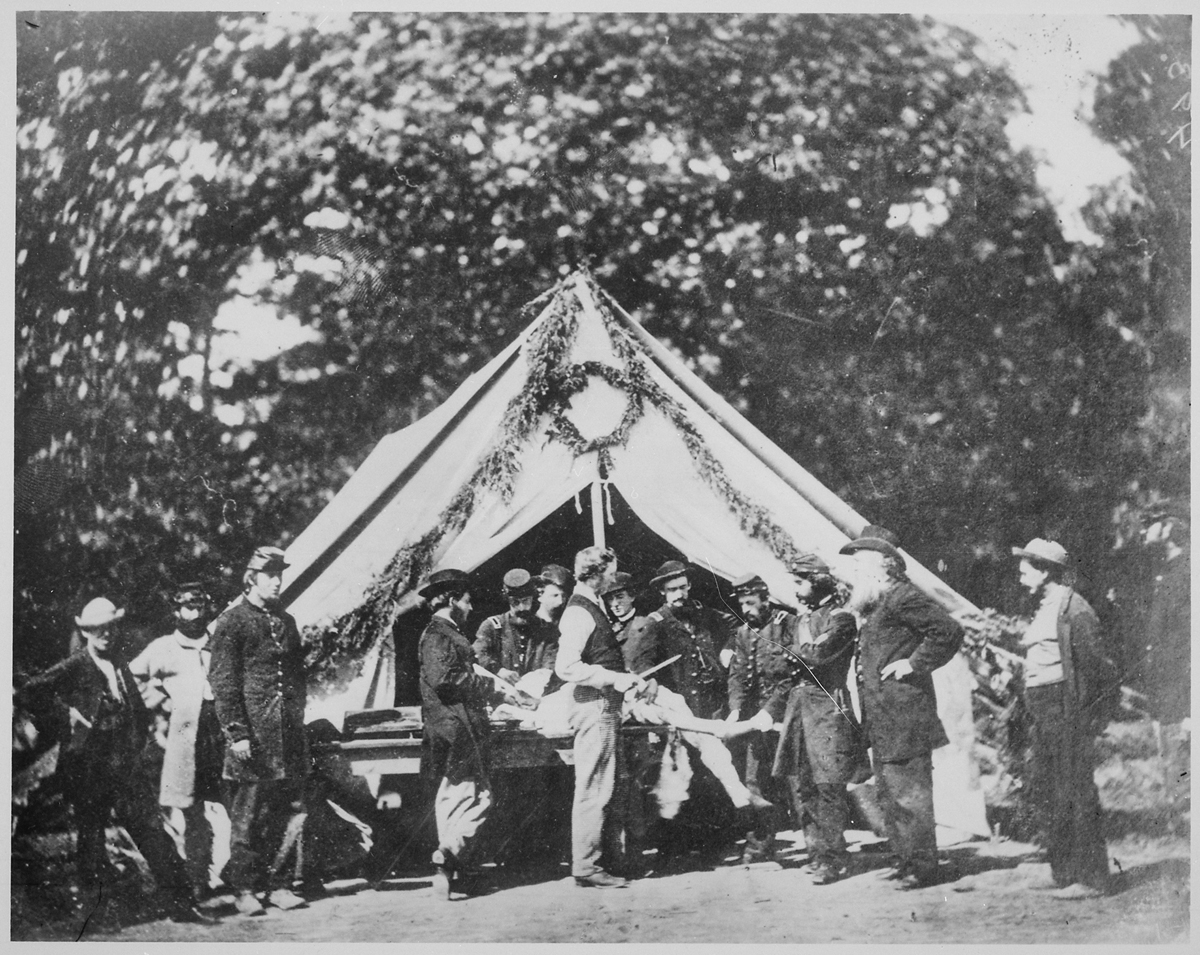
National Museum of Civil War Medicine


Surgeons, Nurses, Soldiers & Hospital Research
As genealogists we are always looking for more information on our ancestors and our veterans in order to ferret out our family history - our story! So when we are introduced to one more repository, especially one that has an online presence of information and photos, we, at a3Genealogy, want to share. Have you perused the National Museum of Civil War Medicine website?

The National Museum of Civil War Medicine “focuses on the many aspects of Civil War medicine, including surgeons, nurses, patients, medicines, diseases, and hospitals.” We know Union surgeons treated more than 400,000 wounded men; about 245,000 of them for gunshot or artillery wounds, and performed at least 40,000 operations.  At the beginning of the war there were 113 surgeons in the US Army, but by the war’s end, there were more than twelve thousand surgeons in the Union and 3200 in the Confederate.

1-2-3 Where To Begin Research
Preview of document
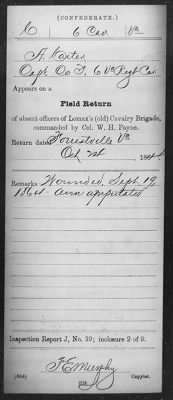
Confederate VA Soldier, Arm Amputated Noted 
In each of the content areas mentioned - Surgeons, Nurses and Women, Soldiers - research begins with the National Archives of Records Administration, D. C. (NARA - Archives I) collections. Be sure to check the online digitized resources of ancestry.com, fold3.com and other free and subscription databases.

Step 1 Veteran Pension Files and NARA Records
For Surgeons 

For Nurses and Women
At the beginning of the war there were approximately 600 women serving as nurses in 12 hospitals. By the end of the war, over 2000 nurses had served. The actual number is not known. 
  • Review the pension records for Union nurses. 
More information may be obtained from the following books:
For Soldiers

This name-based search may yield photos or other artifacts of an ancestor.

Step 3 The Bettie Delaplaine Research Center Library
This Research Center Library associated with the National Museum of Civil War Medicine is open to the public. Of genealogical interest is the possibility of uncovering more information on the following “contents” as listed on the National Museum of Civil War Medicine website:
This Research Center has an impressive collection of books, and artifacts.. These books may assist the researcher in understanding the referenced wounds and disease mentioned in medical / pension files.

Noted African American Contributors
It is well known (see video) that there were at least 12 African American surgeons or assistant surgeons serving in the Union Army. Most were educated overseas or in Canada.  These records are best found in service and pension records. Using the key word “colored” four “Person Records” accompanied with photos popped up. 
  • Joel Morse, born in OH in 1823, his spouse Lucy Maria Sprague and children were named. Joel, a surgeon for the 117th Regiment of the USTC was murdered in Texas in 1866.
  • Martha Canfield established the Colored Orphan Asylum in Memphis after the Civil War
  • Nelly Chase, born in 1838 in New Hampshire, the wife of Capt. George W. Ernest, of the 13th USCT
These are the common names known to most researchers.  However, few can name the African American doctors who served soldiers in the Civil War.  Be sure to read Prologue to Change: African Americans in Medicine  in the Civil War Era.

Other Places to Research
Be sure to also review U. S. Army Heritage and Education Center, at Carlisle Barracks. The Civil War Photographs Database is populated with just shy of 27,000 photographs. 

U. S. National Library of Medicine offers Maimed Men as an informative resource.

Kathleen Brandt
a3Genealogy.com
Accurate, accessible answers

Tuesday, February 16, 2016

Media Release - Civil War Era Records

 Special Event at Midwest Genealogy Center
Presenter: Kathleen Brandt
Saturday, 27 Feb 2016
11:00 - 3:00
Registration - Click Here
To celebrate Black History Month, the Midwest Genealogy Center and the Midwest Afro-American Genealogical Interest Coalition (M.A.G.I.C.) are partnering to present a special event on researching your African American Ancestry during the Civil War period. Join me for two special presentations. 

Claim It! - Civil War Treasures 
Southern Claims Commission Records / Slave Claims Commission Records. 
Researching slaveholders in bordering states or your slave/ancestors? The Southern Claims Commission Records and Slave Claims Commission Records are rich in genealogical treasures (to include Missouri). These collections of property claims hold the names of claimants / slave owners, names of slaves and last slave owner, and accounts from witnesses that often tell family secrets. You may uncover family letters, Bibles, wills, personal accounts, and more. Beginner to advanced. 

Grand Army of the Republic (GAR) & Other Civil War Union Veterans Association Records
Was your Civil War ancestor one of the 400,000 plus G.A.R members? Finding these G. A. R. records and other state-held Civil War Union Veterans’ Association records can be challenging. Learn strategies and resources to ferret out your Civil War soldiers’ post-war memberships to the GAR and other popular veteran associations. These records may include parents’ names, dates of births and deaths, and “new” military information. Beginner to advanced.

M.A.G.I.C. Genealogists will be available to assist participants with research in the Library at the completion of the sessions. Join us to celebrate Black History Month by networking and getting inspired to research your African American Genealogy!

Special Bonus
David W. Jackson, author, will be signing and selling Born A Slave. 

Kathleen Brandt
a3Genealogy.com
Accurate, accessible answers
Sunday, February 14, 2016

Identified as Caucasian for Five Generations!

David W. Jackson, Descendant of Slave
David Jackson searched 30 plus years for his great-great grandfather Arthur and wife Ida with no luck.  But then…he broadened his search, and revisited those documents and tick marks that looked like Census Taker errors.  Could it be?  Could this man enumerated as ‘black’ be his 2nd great-grandfather? Well, possibly he thought.  Indians were often listed on census as ‘black.’ Plus David’s grandfather always said ““Grandpa Arthur wasn’t black. If anything he was an Indian. I met a half-brother of his once and he looked just like the Indian on a buffalo nickel.”

The A-B-C-D Trail of Hints
As we encourage researchers to do, David interviewed his eldest ancestor - Grandpa Roy. Beginning in about 1980 with a photo in hand, David and Grandpa Roy researched and traveled to uncover the ancestral history of ArthurGrandpa Roy had lived with Arthur and his wife Ida. He remembered the family stories. But, the dots never connected.  They rarely do when “passing for white.” “Passing,” as it is commonly called, was rarely mentioned, even when the family knew. (Also read Could He Pass for White? ) But with DNA, many are uncovering their mixed heritage.
A.  Decipher census record information. GG-Grandfather Arthur Jackson was consistently enumerated  as ‘black’, wife white, children mulatto. But based on Grandpa, he was probably enumerated ‘black’ because he was ‘Indian.’
 B.  Listen to family stories. Of course family stories need to be substantiated. But Grandpa Roy mentioned once that Ida (wife of Arthur) had stated that the family was related to the prominent Dr. Jabez North Jackson of Kansas City. Early genealogy efforts of  Dr. Jabez Jackson did not reveal any connection to neither Ida Jackson, enumerated as white, nor her husband, the poor landscape gardener Arthur.  
 C.  Broaden your research.  A cousin researching Ida found the best hint of all in abt. 2010.  In the 1880 census a 21 year old Arthur Jackson, black, was living with an unfamiliar white Jackson family. But who were these Jackson’s? David traced the genealogy of  this white Jackson family. The names of this family were familiar.
 D.  DNA Test. DNA tests will assist in identifying ethnicity and will help support the family researcher when turning to the family.
Revisiting Research 
It was in 2010 that David revisited his 1980 research.  Who was the white Jackson family that this Arthur Jackson was living at the the time of the 1880 census?  They were the ancestors of Dr. Jabez Jackson. David states “Grandma Ida only told part of the story, leaving out the family relationship to Dr. Jackson’s slave family.” Oh, and David confirms that the DNA supports his research.

The Book That Tells It All
"Born a Slave: Rediscovering Arthur Jackson’s African American Heritage,” written by his great-great grandson, David W. Jackson, is a must read.


Presentation
David began his presentation at the Mid-Continent Library, North Branch with - 

"I rediscovered my great great grandfather, Arthur Jackson, was born a slave. State and U.S. Censuses over 40 years listed Arthur as ‘black’ and his wife, Ida, as ‘white,’ and their children ‘mulatto.’”

He will be presenting Born A Slave Thursday, March 3, 2016,
7 p.m.  Claycomo Branch, Mid-Continent Public Library, 309 E U.S. Highway 69, Kansas City, Mo.

Kathleen Brandt
a3Genealogy.com
Accurate, Accessible Answers

Sunday, February 7, 2016

Researching Germans from Russia Ancestors?

German Settlements in Russia
9 Great Resources for Genealogy
It wasn’t long ago that the a3Genealogy research team delved into the family history of a German family from Russia. In spite of being faintly optimistic, the research project was a success; a family story was uncovered, and supporting documents were unearthed.  Here are a few tips to ferret out your German ancestors who lived in Russia. 

Where to Begin
The True Northerner (Paw Paw Michigan, 6 Jul 1877, pg. 2
Learn the history. There are many books and internet articles on the colonization of the Lower Volga and the German settlements along the Black Sea.  But if you want a quick overview here’s an introduction to Germans from Russia.  Know that “thousands of people left Russia for Kansas in the 1870s and established large settlements in central Kansas from northern Topeka to Russell County.”  By understanding the history and migratory paths, researchers may uncover likely repositories of family documents.

Identify the approximate German Settlements on a settlement map. Be sure to understand the Colonization of the Lower Volga, and know that about 1/3 of the Germans died before reaching Russia. But even with those dire numbers by 1870 approximately 450,000 Germans had settled in Russia.  By 1914, there were over 2.4 million.

Follow Emigration from Russia / Immigration to USA Timeline.  When did your ancestor emigrate to America? By narrowing this timeframe, you may be able to identify which area/community in Russia your ancestor emigrated from. As mentioned in Familysearch.org Wiki,  in 1871 the Imperial Russian government repealed the manifestos of Catherine the Great and Alexander I resulting in German colonists being obligated to become subject to Russian military service after a ten-year grace period. This began the mass exodus out of Russia. Here's a basic timeline:

  • 1872-1873 Several groups emigrate from the Odessa area to Nebraska and the Dakotas. Scouts from other Black Sea colonies and the Volga colonies investigate opportunities in America.
  • 1874 The Imperial Russian government amended the 187l decree and instituted compulsory military conscription of German colonists immediately.
  • 1874-1914 Thousands of German colonists emigrated from Russia to North and South America.
  • 1917 Political unrest in Russia lead to two revolutions and the beginning of Soviet communist rule.
  • 1919 The United States government enacts strict immigration laws which greatly slowed entrance of immigrants. Canada continued to receive German immigrants from Russia.
  • 1920-1923 Famine in Russia. Over l50 thousand Volga Germans died of starvation.
  • 1928-1940 German farms and property were confiscated by the state and forced onto collective farms.
  • 1939-1945 The Second World War. Germany at war with the Soviet Union. Germans were persecuted and many moved to Siberia and central Asian republics. Many fled to Germany.
  • 1992-1996 Many Russian Germans emigrated to recently unified Germany where they were offered citizenship.
9 Places to Research Your German From Russia Ancestral Records
Surname Chart prepared by Dr. Igor Pleve
Archives and repositories that may assist with your Germans from Russia research.
  1. American Historical Society of Germans from Russia (AHSGR). Membership to this organization may prove to be quite valuable.  Be sure to visit the website as there is a collection of online resources to include over a half million ancestor list entries. Researchers may even stumble across their ancestors surname in the Ancestral Surname Chart Index leading to a surname chart prepared by Dr. Igor Pleve.  Be sure to also scour the journals, articles, and the passenger list index.
  2. Germans from Russia Heritage Society. This site has an impressive members only Genealogy Database and Letter Archive.   
  3. Center for Volga German Studies at Concordia UniversityPortland. Be sure to check out the 2016 planned conferences, workshops and seminars held in cities across America – from California to Pennsylvania. This informative website also posts German Origins for Volga German families. Is your family listed?
  4. Norka A German Colony in Russia. This website has samples of their online audio and photo collections.
  5. United States, Obituaries, American Historical Society of Germans from Russia, 1899-2012, hosted by FamilySearch.org.
  6. Black Sea German ResearchWas your family a German who settled along the Black Sea vs the Volga?  If so, be sure to visit this website as it hosts a database of over 2 million names.
  7. North Dakota State University (NDSU) Heritage Collection. Although there are many local collections and repositories, the a3Genealogy researchers enjoy the one-stop resource of NDSU. The links provided may prevent a family researcher from hours of trawling the internet.
  8. The Federation of East European Family History Societies (FEEFHS).  Did your German from Russia settle in Canada? This is a good place to begin your ancestral journey. The FEEFHS website offers about 20  resources for your Germans from Russia Canadian settlers.
  9. Germans Emigrated to Russia - Odessa.  This 2010 a3Genealogy blog post is filled with history and helpful links.
Thanks to the following:
  • Ryan Zachmann from Russell Kansas, a descendant of Volga Russians (and based on surname Zachmann may be Black Sea Germans on his paternal side). Ryan, my “seat-mate” on a flight to Kansas, reminded me that this blog post could be useful. 
  • National Archives - Kansas City staff sponsored presenter Mike Meisinger, a Village Coordinator for AHSGR. As mentioned this organization houses a wealth of information. 

Kathleen Brandt
a3Genealogy.com
Accurate, accessible answers

Saturday, November 21, 2015

6 New Genealogy Quick Look Resources


Free Indexed Collections - Midwest Genealogy Center 
Keeping the family researchers in mind, the Midwest Genealogy Center (MGC) has taken on a large indexing project entitled Quick Look.  The librarians and volunteers at MGC are once again helping genealogists everywhere to keep our promise: “leave no stone unturned.”  This time MGC has indexed, by name and by date, the following collections for easy online access. No library card needed, no fee, just a community service project that makes it easier for us to find “Great-Uncle Bob” or in my case Great-Aunt Mattie (see below).

What Is Indexed?
The following six collections have been indexed. For information on each collection visit the List the Collections page.
  1. Book Indexes to “some books” in MGC's reference collection.  This Book Index will take you directly to the MCPL Catalog entry for holdings and location of the book that holds your ancestor’s name.
  2. Independence Examiner Newspapers: 1900-1959
  3. Kansas City Social Registers Blue Books: 1924-1962
  4. Kansas City Star and Kansas City Times (newspapers): 1975-2006
    Be sure to review the List the Collections page for information.
  5. The Kansas City Call Newspaper: 1995-2001. This is a great resource for African American families. Know that African Americans across the Midwest reported deaths to “The Call”. In Kansas we have successfully located obituaries as far as Hutchinson.
  6. U. S. Railroad Retirement Board: 1936-2010. You can search the index to over 1.5 million pension records from the U.S. Railroad Retirement Board for free online.  These pension files are held at the National Archives and Records Administration (NARA) in Atlanta. 
1-2-3 to Obtain Copies
The goal is to get a copy of whatever document is available - obituary, book page, RRB claim, etc. By providing the holding repository with the indexed information, they will be able to locate, copy and forward a digital or email copy of the information.  Note: RRB claims will be photocopied and mailed if available.  It's pretty simple, since you will just follow the screen prompts for your next steps. 

Mattie Singleton was my grandmother’s sister. I really knew little about her and have never seen her obituary. Would Quick Look have her obituary indexed?

  1. Search Index.

    Once a person of interest is located, researchers can request the actual document from the holding location.
  1. Analyze / Identify Options

    Her obituary was in The Call Newspaper
    Her birth date and death date were indexed
    Her burial place was provided
    Her parent’s and daughter’s names verified her to be the correct Mattie Singleton.  Note: This will only be entered if it was in the obituary.
  1. Submit Request

    If your request is for MGC, print copies are only 10 cents per page, but I prefer digital copies emailed to me - free!

    For a RRB Claims package, you will be directed to the National Archives at Atlanta website.  Here’s information on what will be needed to request a claim folder. But be sure to check the index first.  Plus you are guiding the NARA staff to the Record and Claim ID,  and Claim Location which usually results in a much quicker turn-around. 
Search Tips?
  • Researchers will want to visit the HomePage for Search Tips.  
  • Railroad Retirement Board Pension (RRB) Claims index will be most effective if you have a birth and/or death date for your ancestor as additional identifying information is not provided in the index. You will find only the surname followed by the first initial with a birthdate  to be indexed.
Although request retrievals are free (you only pay for copying), I suggest giving a donation - a token of appreciation - to MGC, a public library branch of Mid-Continent Public Library. Let them know we love their efforts and their support to our success.

Kathleen Brandt
a3Genealogy.com
Accurate, accessible answers

Monday, November 9, 2015

Research University MO. Student Protests 1959-2015


Across America, Students joined in the efforts
“Injustice for One is Injustice for All.”
 Although University of Missouri, Columbia, MO. students may believe that the current protests are unprecedented, it is far from being so.  MU's student body and student athletes have historically fought against racism, and injustice on both the local and national level.  Columbia, MO., shadowed by St. Louis to the east and Kansas City, MO to the west, has historically been a popular location for racial change and protest against injustice. 

3 Places to Research Student Protests History - Columbia, MO
Accounts of student protests for racial change can be found as early as 1959  - five years before the Civil Rights Act of 1964. In The State Historical Society of Missouri historical researchers can locate papers of the Columbia Chapter of Congress of Racial Equality (C.O.R.E.).  C.O.R.E.’s philosophy was “nonviolence in the fight to end segregation and discrimination.” The Columbia MO. chapter, members predominately local students and faculties, was most active from 1959 - 1964, over fifty years ago. The student driven organization fought the issues of segregation, discrimination and on-campus racism through “pickets, boycotts, demonstrations, fastings, and sit-ins.”

Few realize that in Columbia, MO there are two other change-makers: Stephens College and Columbia College. And in the past, standing as a collective group, students from these three campuses fighting and protesting racial issues and injustice has proven effective.

  1. Collection C2508, The Congress of Racial Equality Papers, contains constitutions of the national and local C.O.R.E., minutes, membership lists, clippings, and correspondence. It is not comprehensive, but a great source for Missouri researchers.
  2. Stephens College Archives, Columbia MO.
  3. Newspaper Research
 For information on St. Louis CORE chapter visit Dagen, Margaret and Irvin History of St. Louis Core Collection, 1941 - 2000, collection S0661 at the State Historical Society of Missouri.

Kansas City researchers may wish to begin by reading Leon Mercer Jordan, The Founder of Freedom, Inc. This manuscript can be located at the Missouri Valley Special Collections in the Missouri Public Library.

Student Fasting

Even students fasting for change, is not new in Columbia, MO.  There was a rather long and lengthy fasting movement involving the Stephens College women student body and the students from Mizzou in 1965, as well as their faculties. At that time the students were protesting U.S. involvement in Viet Nam, again under the banner of “injustice for one is injustice for all.”

Athlete Involvement
Even fifty years ago the athletes were pivotal participants in on-campus change.  One basketball player, self proclaimed “progressive white student” from south St. Louis, John Logsdon was the president of the Columbia, C.O.R.E. chapter, 1962 - 1963. Of course race relations has improved since Logsdon’s presidency of C.O.R.E.  In a reflective article written 13 Nov 2013, entitled Columbia’s Core, John speaks of the one black person, Malvin West (BS BA ’62) that was shunned in 1960: “No white student in the class would sit next to him.”  It was Malvin who invited Logsdon to his first C.O.R.E. meeting.

About Core
Logsdon’s account of the Columbia MO. C.O.R.E. chapter states that active students were “half black, half white; many of the white members were women from Stephens College.”  C.O.R.E was a national organization founded in 1942. Chapters of C.O.R.E worked and supported many other civil rights groups to desegregate public facilities, organized Freedom Rides, participate in the March on Washington, 1963, but in Columbia, MO, the local efforts concentrated on campus segregations at University of Missouri and student racism.   

Kathleen Brandt
a3Genealogy.com
Accurate, accessible answers